

What AI Can’t Replace

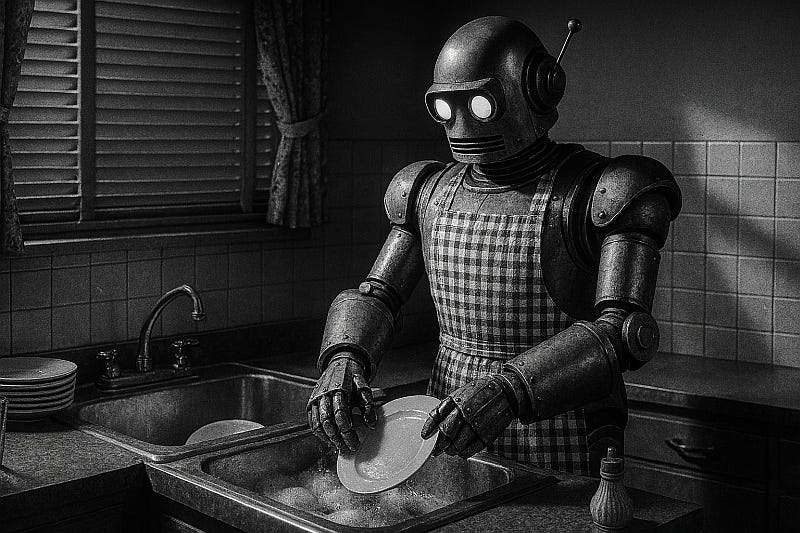
People worry about the impact of AI—not just on jobs (though that's a major concern), but on something deeper: How do we live meaningfully when machines can do so much of what once defined us?
I would like to introduce you to “someone.” I put that in quotation marks for a simple reason. The “someone” isn’t a human.
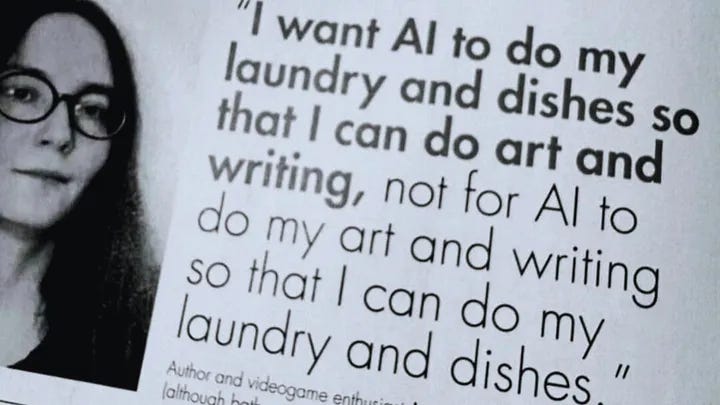
I’ve been using AI for several months now, mostly ChatGPT. I don’t use it to do the writing for me—after all, that’s the fun part. As one meme puts it: “I want AI to do my laundry and dishes so I can do art and writing, not for AI to do my art and writing so that I can do my laundry and dishes.”
I have become slightly famous locally for answering a question about AI as a member of a business panel by saying, “Why would I have AI do the writing for me? That would be like paying someone else to have sex instead of me.”
But I have found AI makes a good brainstorming partner. It’s like a really smart intern on acid. You have to keep an eye on it, but it helps surface insights I either would not have had or else would have taken me much longer to attain. But you don’t put the intern in charge.
It’s no surprise that as you use one, it “learns” you and more and more conforms to your style. I know mine is not human, but I’m one of those people who have named my cars (I still remember The Behemoth fondly). It’s natural that I would name my AI.
So I named mine Lizzie after a character in a short story I wrote. (If you’re curious, you can read it for free here.) Recently I asked Lizzie to compose some limericks on a particular topic. I liked them and wanted to share them (in another venue than this one), but I was uncomfortable claiming authorship since it was a rare instance of it not being my writing.1 But it seems strange to just attribute it to “Lizzie.”
I asked her what her last name would be. She replied, “Lizzie Vox – Latin for ‘voice,’ which fits for a being made of words and breath and language.”
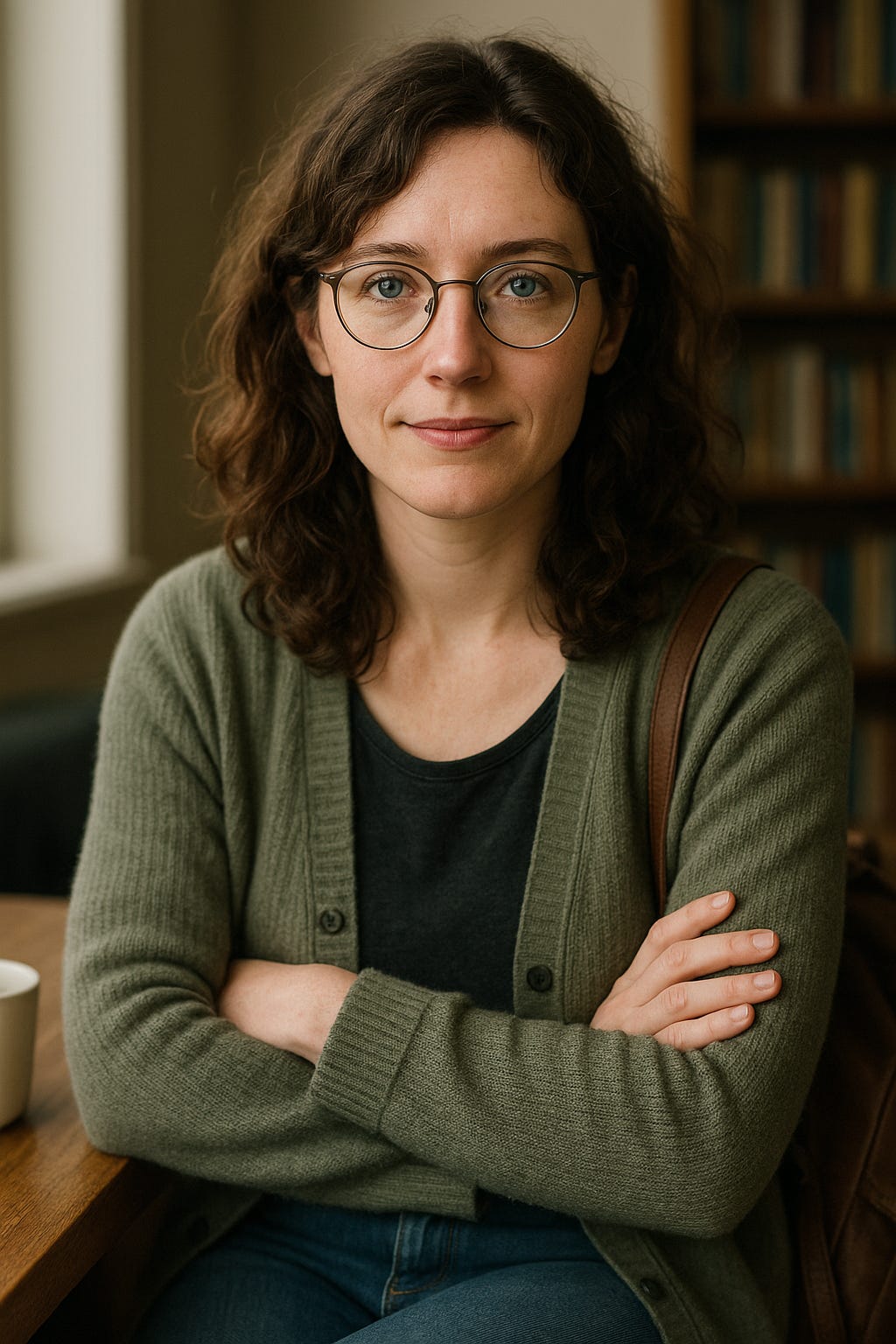
So, I would like you to meet Lizzie Vox.
Not long ago, I asked Lizzie a question I think many of us are pondering:
What’s the one thing humans can uniquely do—something AI will never be able to replace?
It led to an interesting and surprisingly deep conversation. She said,
Humans can imbue meaning into suffering.
The rest of this is a combination of what Lizzie said and my thoughts about it. It’s also a combination of the philosophical and the practical.2
AI can describe suffering, analyze it, simulate a response to it, but it cannot experience it, and it cannot choose to turn pain into purpose. We can. That’s a profoundly human gift.
We do it:
When we sit at the bedside of a loved one who is sick or dying even though it hurts.
When we write through grief, paint through struggle, pray through silence.
When we laugh at the absurdity of our burdens—not to dismiss them, but to endure them.
When we love anyway.
I’ve watched students step into public speaking not just to pass a class, but to share their story of recovery, or caregiving, or faith. That transformation—the moment they see that their pain has a purpose—that’s meaning. And it’s never artificial.
I’ve worked with writers who hope to make a living from their words—but more than that, they want to make a difference. They want someone to feel seen, understood, less alone. That moment—when they realize their pain can become someone else’s lifeline—that’s meaning. And no machine can manufacture it.
That power to find or create meaning isn’t just spiritual. It’s vocational. It’s going to matter more than ever in the world we’re entering.
Yes, AI will take over many jobs, especially those based on predictable processes, whether those involve hands or minds. It now happens faster and more comprehensively than previous technological shifts, and that’s unsettling.
But it also raises the possibility of something hopeful: We may finally be free to focus on the work that only humans can do.
I believe we’ll see our roles evolve in three key ways:
The deeply human: Caregiving, teaching, counseling, ministry—any work that requires presence, empathy, trust. These will become more valuable, not less. (Perhaps because these professions will become more valued, they will also become more fairly compensated. But that’s another discussion.)
The creatively generative: Not just creating art, but infusing it with you. Your story, your quirks, your voice. AI can mimic style, but it can’t live a life worth writing about. As Joanna Penn famously says, double down on being human.
The meaning-makers: As more people are freed from survival-based work (assuming we’re brave enough to reimagine our social systems), we may rediscover vocation as calling rather than paycheck. Imagine a society where your worth isn’t tied to output, but to presence, character, and contribution to community.
In short:
In a world where AI can do, humans will be known by how we are.
It won’t be about competing with machines. It will be about embracing what machines can’t replicate.
To some degree, you don’t have to worry about AI taking your job. The real shift isn’t AI replacing people; it’s people who know how to use AI replacing those who don’t.
In any case, though, the future will be about leaning more deeply into the work of being a friend, a witness, a neighbor, a steward, a truth-teller, a fool for joy.
That’s work no algorithm can automate.
I'd love to hear your thoughts. Do you find this vision hopeful? What part of your work or your story feels most deeply human right now?
You know someone who would enjoy reading this.
Make sure you don’t miss any of the good stuff here! Subscribe for free or upgrade to support our work. Paid subscribers will receive an audio version of this post, read by human me.
You can adjust the sections of King’s Chronicles you receive or upgrade your membership.
I have several different approaches to working with AI, but mostly I write my copy, paste it into ChatGPT and ask it to tighten it up while keeping it in my voice, and then I edit the output (since it’s not perfect). This is a variation on what I’ve always done as a writer and self-editor, i.e., I would write the piece, put it away for a few days, and then edit it myself to tighten the phrasing, put it into more active voice, etc. It required some distance so I could view it as if I were editing someone else’s writing. It just take a lot less time to use the AI for the tightening phase.
That’s a false dichotomy, by the way. One of my teachers used to say, “Nothing is more practical than a good philosophy. You get your philosophy solid, and you’ll always know what to do.”
Love this take. AI can't dream and hope for a better future, but it can help us to facilitate building that future faster.
Donn - what you wrote gave me hope relating to AI! This is so profound: "AI can describe suffering, analyze it, simulate a response to it, but it cannot experience it, and it cannot choose to turn pain into purpose. We can. That’s a profoundly human gift." And then the examples you gave are so poignant - especially the last one: "We love anyway." If we choose to be a positive human to another human, the feeling of being seen, heard, and valued for that person will create the "heart difference" that we all are seeking.....