

When the World Feels Overwhelming
How to Stay Human in an Age of Strategic Chaos

Every age has its defining noise. In ours, it is the constant churn of information. Alerts, arguments, headlines, counter-headlines, scandals that bloom and wilt before you even reach the bottom of the page. Plenty of people feel exhausted by it. Some feel helpless. Most feel unsure of what they can do that will matter.
And that sense of overwhelm is not random. It is a deliberate strategy.
One of the most effective political communication tools of the last decade is something Steve Bannon once described as “flood the zone.” The idea is simple: overwhelm the public with so much information, misinformation, outrage, and counter-outrage that people cannot sort the true from the trivial. If people cannot tell what matters, they stop trying. They disengage. They become spectators rather than participants.
A disengaged public is far easier to manipulate than an attentive one.
This is not a new tactic in world history. What is new is the volume and velocity. The fire hose always gushes. The pressure never drops.
Naming the moment with honesty
Now, a necessary clarification. People sometimes try to solve their discomfort by saying “both parties do it.” This is not one of those moments. Human beings across ideologies certainly abuse power. History proves that. But the most aggressive forms of chaos communication, loyalty enforcement, and institutional erosion right now are not evenly distributed. They are concentrated in a specific faction that has effectively captured what once was an honorable party and hollowed out its core.
Traditional conservatives have said this openly. The Republican Party they knew has been replaced by a personality-driven structure that rewards obedience, not principle. Many elected officials who know better remain silent because their careers depend on it. Some do it for ambition. Some for fear. Some for the hope that the storm will pass if they keep their heads down.
But this is not about one party being pure and the other corrupt. It is about individuals who have discovered they can use confusion and resentment as tools for personal gain, even if it destroys their own institution in the process. They are not building a movement. They are strip-mining it.
You do not have to be a Democrat to see it. You only have to be paying attention.
So what can ordinary people do?
When a problem feels national or global, the temptation is either panic or paralysis. Neither helps. The good news is that the most effective forms of resistance are small, human, and within reach. They do not require you to debate strangers online or memorize the latest outrage cycle. They require something far simpler: attention to what strengthens people rather than fractures them.
Three areas offer real leverage. Note: this is not a counter-strategy for winning. It is a strategy for remaining human, regardless of party.
1. Strengthen the relationships that chaos depends on weakening
Chaos thrives when people retreat into tribes. It weakens when people retain the ability to talk across lines without contempt. If you have even one or two relationships where you can ask honest questions and disagree in good faith, you quietly resist the machinery that profits from division.
Bridge builders do not often get credit, but they do slow the spread of fire. That matters. It doesn’t require compromising your values or pretending differences don’t exist. It does foster the values we share.
2. Support the institutions that still function
Local institutions are often the last strongholds of democratic health. Community colleges, libraries, faith communities that serve rather than posture, school boards that care more about students than slogans, local journalists who still chase truth instead of clicks. These spaces do not depend on national chaos for their oxygen. They depend on neighbors.
If you want to protect the future, strengthen something small and local. It will outlast more noise than you think.
3. Guard your own clarity
Chaos communication works by overwhelming the mind until everything feels equally urgent. The most important act of citizenship right now may be protecting your cognitive space. That means limiting exposure to outrage cycles. It means taking time to reflect rather than reacting at the speed of someone else’s agenda. It means refusing to let exhaustion masquerade as realism.
Despair is understandable, but it helps the very people who profit from confusion. Staying steady is not passive. It is a form of resistance.
Why my brand statements matter here
If you have followed my work, you know that I lean on two guiding statements that shape everything I write and teach.
I write to challenge, encourage, and equip people
to live in courageous alignment with their values.
and
“Stories of Curiosity, Connection, and Creativity, distilled with wry.”
These are not marketing lines. They are commitments. They remind me that in times of confusion, our deepest work is not to shout louder but to live truer. Curiosity keeps us from being captured by propaganda. Connection counters isolation. Creativity allows us to imagine something beyond the current noise. And courage is what lets us act on our values even when the world feels sideways.
If you have ever wondered why I avoid cheap cynicism, or why I insist on steadiness even when the headlines tempt us toward rage, these statements are the reasons. They keep my compass aligned when everything else is spinning.
Honest writing is part of that work. Honest listening is another. Honest community may be the most powerful of all.
A closing word
Democracies do not fail because half the country suddenly becomes wicked. They fail when opportunists discover they can gain power through confusion and resentment, and when too many people of goodwill decide the effort to stay grounded is not worth it.
So here is my encouragement. Choose steadiness over spectacle. Choose curiosity over certainty. Choose connection over contempt. You do not need to solve the entire nation. You need to help one or two people around you remember that sanity is possible.
Chaos is cheap. Integrity is costly. But integrity is also how societies hold together in noisy seasons. And right now, the world needs more people who are willing to live in courageous alignment with what matters most.
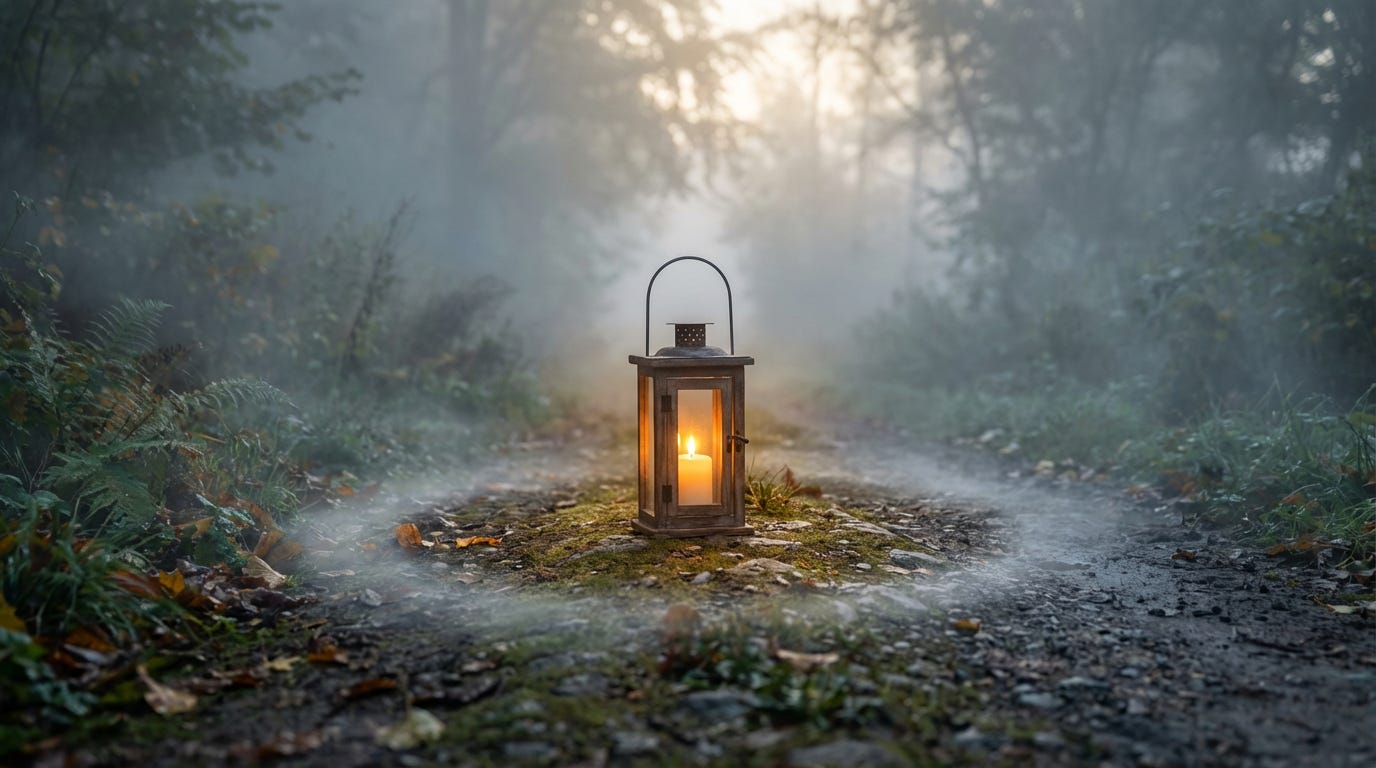
Even small lights help others see their footing. Drops of rain begin rivers. Nations heal through the accumulation of individual healing. That is how we stay human.
If any part of this rang true for you, your next step does not need to be dramatic. Choose one action from this list and do it in the next forty-eight hours.
Have one calm conversation with someone who thinks differently from you.
Support a local institution that strengthens your community.
Set one boundary that protects your peace of mind.
Just choose one. Doing something small and local is far more powerful than watching something large and national unfold in despair.
Before you close this post, take one deep breath. Then write down your response to this question: “What helps me stay human when the world feels loud?”
Keep the answer somewhere visible. Let it guide your decisions in the coming days. Reflection becomes resilience when we revisit it.
And if you don’t mind, please share what you wrote here. We will encourage each other.
Donn King is The Confidence Cultivator, author of The Sparklight Chronicles—a series of business parables—along with his latest book called Creating While Caring: Practical Tips to Keep Creating While Caring for a Loved One, all of which you’ll find at DonnKing.com/Books. He’s an emeritus professor of communication studies (which means “a professor of standing up in front of people and saying stuff”), now serving as a pastor, speaker, and communication coach. Want to increase your impact, grow your influence, or build your career? Reach out at donn@donnking.com.

If you’ve found value here and want to support the work, you can Buy Me a Coffee for a one-time gift, or subscribe for free, or upgrade to a paid subscription to access bonus content. Thanks for reading, supporting, and being part of the journey!
Note: some of the links in this newsletter are affiliate links. That means that when you use them, you contribute to our support without increasing your costs at all. Thank you!
You know the drill—please like, comment, and subscribe. That helps others benefit.
P.S. If you’re enjoying this newsletter, come hang out with me on Substack Notes! It’s like the social side of Substack, where I share quick thoughts, behind-the-scenes glimpses, links I love, and more.
👉 Click here to follow me on Notes so you don’t miss a thing!
Donn, thanks you for this--well-considered and compassionate advice for a troubling time.
Wise words. "Choose steadiness over spectacle. Choose curiosity over certainty. Choose connection over contempt."